✓ Free Foundation Evaluations

◷ Monday–Friday, 8 AM–5 PM

◆ Fully Insured · Lifetime Warranty

Home Commercial Services

Commercial Services

Commercial Foundation Repair & Drainage Services

Serving Fort Worth, Dallas, Abilene, & surrounding North Texas communities

Straight Line Foundation Repair & Drainage has been providing foundation repair to commercial businesses and multi-unit properties in Fort Worth, Dallas, Abilene and throughout Texas for over 20 years. We specialize in foundation repair and restoration, concrete piers, dirt work, drainage, and directional drilling. Our goal is to build lasting relationships through our superior workmanship and customer service. We will work hard to help contribute to your business’s success. Straight Line has an A+ rating with the BBB and has many references upon request.

Fast. Free. No Obligation.

Takes About 30 Seconds

Schedule Your Free Evaluation

No pressure. No runaround. Just a straightforward assessment.

    ▣ Your information stays private and is never shared.
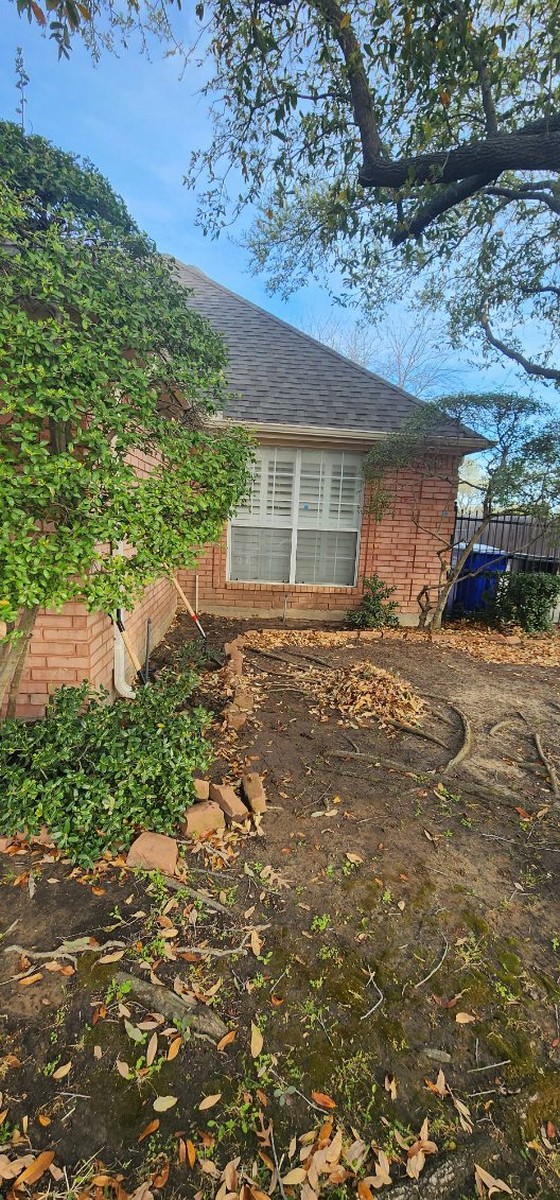
    Straight Line hybrid pier foundation repair work

    Piers & Pilings — New Construction & Remediation

    Commercial foundation work starts with the project requirements: structural loads, existing conditions, access, subsurface information, and the repair or construction plan prepared for the property. Piers, pilings, footings, and fabricated connections are different ways to support or reinforce building elements. The appropriate system and installation sequence depend on the structure and the recommendations of the project’s qualified professionals.

    • Helical PiersHelical piers use steel shafts with helical plates that are advanced into the ground. On commercial projects, they may be specified for new foundations, additions, equipment supports, or underpinning where access and excavation limits make a compact installation method useful.
    • Drilled PiersDrilled piers are constructed by creating a shaft to the specified depth and placing reinforcement and concrete as required by the design. They are commonly used beneath columns, grade beams, additions, and other concentrated structural loads.
    • Cast in Place PiersCast in place piers are formed at the project location by placing concrete into a prepared excavation or form. They can be incorporated into new foundation work or repair details where the design calls for a site-formed concrete support.
    • Steel PiersSteel piers use driven or mechanically advanced steel sections with brackets or connections designed for the structure. In commercial foundation repair, they may be used to underpin and stabilize portions of an existing foundation when specified for the site.
    • HybridA hybrid pier combines selected steel and concrete components or installation methods within one support system. Its commercial application depends on the engineer’s design, available access, structural loading, and the conditions encountered at the repair location.
    • BollardsBollards are protective posts anchored near entrances, corners, utilities, equipment, and traffic areas. They are not foundation repair piers; they are related commercial concrete and site-work components used to help separate vulnerable building features from vehicle paths.
    • Concrete FootingsConcrete footings spread structural loads over a designed bearing area and provide a base for walls, columns, equipment, or site structures. Commercial projects may require new footings, extensions, replacements, or connections to other foundation elements.
    • Custom Fabrication if requiredCustom fabrication provides project-specific steel brackets, plates, supports, or connection pieces when standard components do not fit the approved repair detail. Fabricated components should match the dimensions, materials, and installation requirements established for the project.

    Directional Drilling (All Aspects)

    Directional drilling is a trenchless construction method used to create a planned underground path between entry and exit points. On a commercial property, it can provide a route for conduit, sleeves, piping, or drainage components beneath pavement, access drives, walkways, landscaping, or other developed surfaces. Because most of the route is installed below grade, the method can reduce the amount of open trenching and surface removal compared with excavating the full alignment. A commercial drilling plan still requires utility locating, a defined bore path, appropriate entry and exit areas, and coordination with existing foundations, buried services, traffic, and site operations.
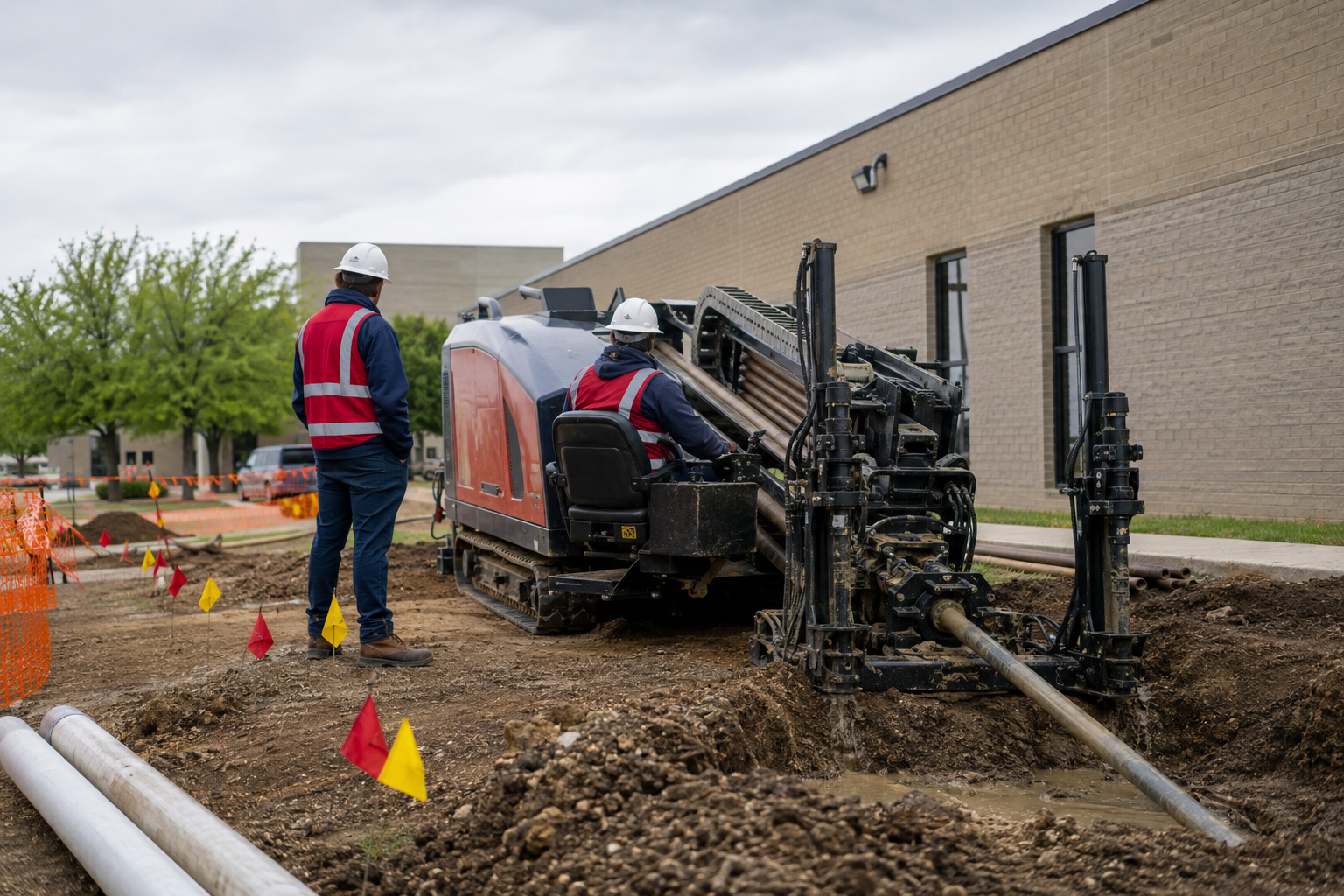
    Representative image showing a commercial horizontal directional drilling operation

    Representative service image; not presented as a Straight Line project photograph.
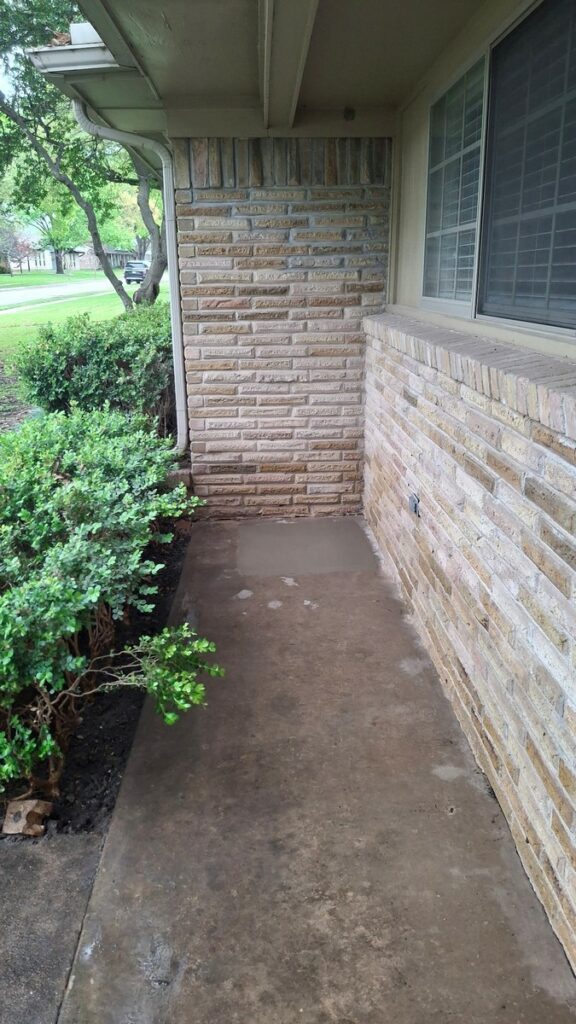
    Excavated access on a Straight Line pier and drainage project

    Dirt Work

    Dirt work prepares the ground for foundation access, underground routes, and the finished site grade. On occupied commercial and multi-unit properties, the sequence matters: crews must work around structures, utilities, paved areas, drainage features, and tenant or customer access while keeping the excavation matched to the repair or construction plan.

    • ExcavationExcavation removes soil to expose foundation elements or create working space for piers, footings, grade beams, drainage components, and other below-grade work. The limits and depth should follow the project plan and account for nearby utilities and structures.
    • TunnelingTunneling creates below-grade access beneath a slab or developed surface when opening the area directly above is impractical. In commercial foundation work, it can provide a controlled route to reach interior work areas while reducing disturbance at the occupied surface.
    • GradingGrading adjusts surface elevations and slopes around the building and site. It is used to establish the planned finished grade, coordinate transitions to paving and entrances, and direct runoff toward the intended drainage path rather than low areas beside the foundation.
    • TrenchingTrenching creates a narrow linear excavation for drainage lines, sleeves, utilities, footing work, or access along a foundation edge. On commercial sites, the route must be coordinated with traffic areas, buried services, restoration limits, and the required line and grade.

    Site Drainage

    Site drainage manages surface and subsurface water around commercial and multi-unit foundations. A drainage plan may combine collection points, piping, swales, grading, and discharge routes so rainfall and site runoff move toward an approved outlet. This does not replace structural foundation repair; it supports the property’s broader water-management plan by reducing avoidable ponding and uncontrolled flow near building edges and work areas.
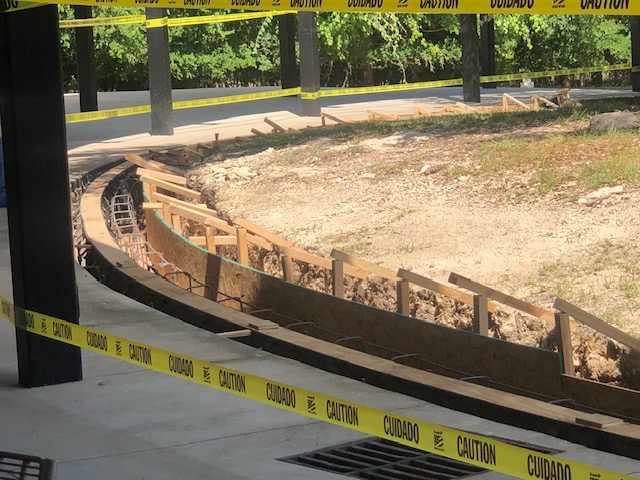
    Straight Line drainage project at a commercial church property
    • ExcavationFor drainage work, excavation creates space for basins, inlets, piping, swales, and other collection or conveyance components. Depth and limits are based on the planned elevations, connections, and outlet so the finished system can move water as intended.
    • TunnelingDrainage tunneling can carry a line beneath a walkway, slab, drive, or other surface that should remain in place. It is useful when a continuous open trench would interfere with access or require unnecessary removal of finished commercial surfaces.
    • GradingDrainage grading reshapes the surface so water follows the planned path toward inlets, swales, drains, or another approved discharge point. Around commercial foundations, the goal is to correct low areas and transitions that allow runoff to collect near the structure.
    • TrenchingDrainage trenches provide the linear path needed for solid pipe, collection systems, or subsurface drainage components. Proper route, depth, slope, bedding, and restoration are important where the line passes through landscaped, paved, or actively used commercial areas.

    Schedule a Free Foundation Evaluation

    Get an honest assessment and a straightforward solution built to last.