
✓ Free Foundation Evaluations
◷ Monday–Friday, 8 AM–5 PM
◆ Fully Insured · Lifetime Warranty
★★★★★4.8 Google Rating·Family-owned foundation specialists
Foundation repair in Denton, TX begins with the structure, but it should not ignore the roof water and surface runoff moving around it. Straight Line reviews cracks, floor elevations, doors and windows, foundation construction, gutter performance, downspout discharge, grading, and moisture patterns before recommending a next step.
Property-Specific Evaluation
Visible symptoms, elevations, drainage, and structural conditions are reviewed together.
Clear Repair Plan
You receive an understandable explanation of the findings and available next steps.
Lasting Protection
Qualifying pier work includes a lifetime warranty with no transfer fees.
Foundation
Repair
Pier & Beam
Solutions
Drainage
Support
Honest
Evaluations
Fast. Free. No Obligation.
Takes About 30 Seconds
Schedule Your Free Evaluation
No pressure. No runaround. Just a straightforward assessment.
Your information stays private and is never shared.
Family Owned
Personal accountability
Fully Insured
Professional protection
Lifetime Warranty
On qualifying pier work
No Transfer Fees
Protection that follows the home
Complete structural and water-management services
A useful Denton foundation evaluation separates symptoms from conclusions. Straight Line records where cracks appear, checks floor conditions and elevations appropriate to the building, identifies slab or pier-and-beam construction, and compares interior changes with what is visible around the perimeter. The review also includes gutter lines, roof valleys, downspouts, low areas, and signs of repeated runoff.
Structural support may involve slab foundation repair, pier-and-beam foundation repair, or work on block-and-base components. Water-management needs may involve drainage systems, gutter installation and repair, grading, retaining walls, excavation, or tunneling for protected access. Recommendations are organized around the cause the work is intended to address and the route crews can use without promising a one-size-fits-all result.
Roof water becomes part of the site drainage picture.
Denton’s municipal drainage information explains that runoff can come from storms as well as hoses and sprinklers. At the property level, Straight Line traces where collected roof water and surface flow actually travel before recommending a drainage or gutter response.
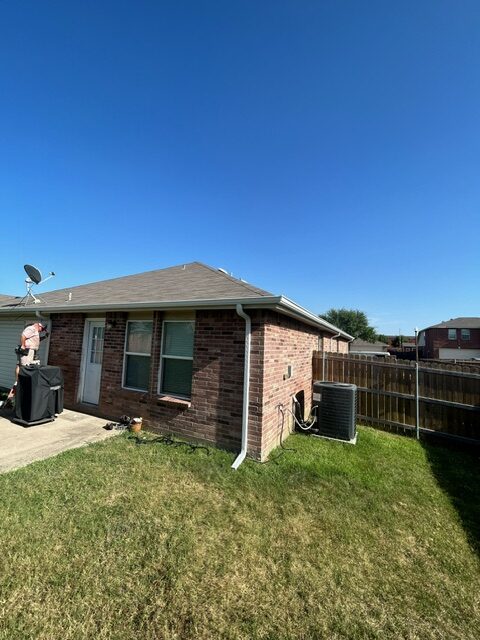
First-party photography from Straight Line’s documented Denton gutter installation.
Structure, roof collection, and discharge
Denton projects are scoped by separating the structural concern from the water route, then coordinating them when the evidence shows they interact.
Concrete slabs and raised floor systems respond to support differently. Straight Line uses the identified foundation type, measurements, affected area, and working access to develop the Denton repair scope. Piers, support adjustments, or shimming are considered only where the documented conditions show they are warranted.
Drainage design begins at the collection point and continues to a responsible discharge location. Straight Line reviews surface flow, ponding, erosion, grade, existing inlets, buried utilities, and outlet options before coordinating French drains, surface drains, channel drains, swales, or underground piping.
A gutter system must collect roof water without uncontrolled overflow and move it through downspouts that discharge appropriately. Straight Line checks damaged sections, seams, slope, downspout locations, extensions, and connection points so the Denton gutter work supports the larger water-management plan.
Document structural and water clues together
Professional foundation repair contractors in Denton should explain which observations relate to support and which point toward water management, maintenance, or another trade. Straight Line reviews elevations, foundation cracks, uneven floors, sticking doors, exterior materials, gutter performance, drainage paths, and working access before defining the scope.
Notice whether settling symptoms change after dry periods, watering, or rainfall, but do not assume timing alone proves the cause. Photographs and dates give the evaluator a more useful history.
Recurring Drywall Cracks
Record cracks that return after patching, extend from openings, or change width. Include the full wall in photographs so the position can be compared with nearby doors, windows, and floor changes.
Sticking Openings
Changing door gaps, latches that no longer meet, and windows that become difficult to operate can help map movement when they occur near other documented symptoms.
Uneven or Sagging Floors
Slopes, low spots, movement underfoot, or bounce deserve evaluation against the foundation type. Raised systems also require a review of accessible supports and conditions below the floor.
Brick and Trim Gaps
Stair-step cracks, separated caulk joints, and gaps between masonry and trim may help define an affected area, but they do not identify the repair method without measurements.
Gutter Overflow or Leaks
Water passing behind a gutter, spilling over a low section, or discharging from a failed seam can concentrate roof runoff beside the structure and should be documented during rain when safe.
Ponding and Washed Soil
Standing water, repeated dampness, sediment trails, or erosion beneath a downspout shows where water is collecting or moving. Photograph the source and the route, not only the final puddle.
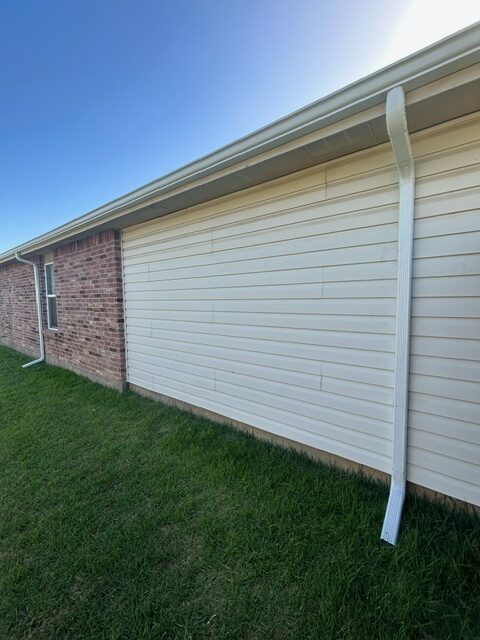
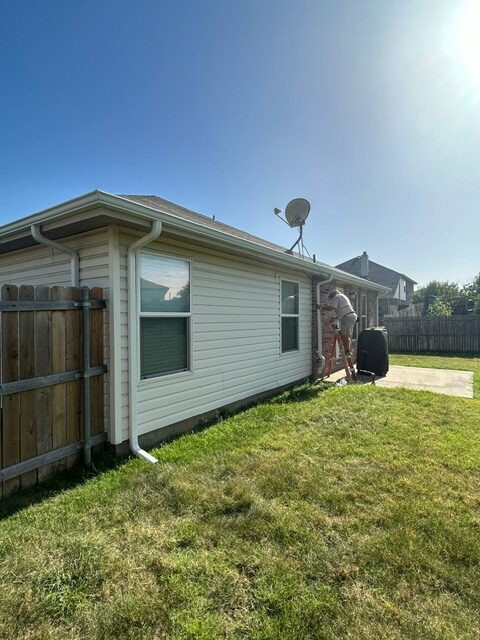
Documented Denton project
Straight Line’s project archive documents a gutter installation completed in Denton. The system was fitted to the building to collect rainwater and move it through a coordinated gutter-and-downspout route rather than allowing uncontrolled discharge beside the foundation.
The photographs show the installed runs, corners, and vertical discharge components. This project supports a practical point: gutter work is not merely a cosmetic roof-edge addition. Capacity, slope, seams, downspout placement, and the final discharge location all affect whether the system manages water as intended.
Straightforward from start to finish
1
Straight Line listens to the reported concerns, documents interior and exterior conditions, takes relevant measurements, and follows roof and surface water from collection areas toward discharge points.
2
The findings identify whether structural repair, gutter work, drainage improvements, monitoring, or a combination is supported. Each component is explained with its intended purpose and access requirements.
3
The crew completes the approved Denton scope, protects adjacent areas, clears installation debris, and reviews the finished work, discharge route, and applicable warranty documentation.
One evaluation instead of disconnected guesses
Straight Line considers structural symptoms, gutters, grading, and drainage together while keeping each recommended service tied to a documented Denton condition.
A visible crack does not predetermine the answer. Straight Line reviews the foundation system and surrounding water conditions before recommending repair, monitoring, maintenance, or another qualified specialist.
Gutters and drains are scoped as a route from collection to discharge. Homeowners receive an explanation of how each component fits the Denton property instead of a list of unrelated products.
Straight Line is fully insured. Qualifying pier work includes a lifetime warranty with no transfer fees, with the applicable protection explained for the approved structural scope.

Common homeowner questions
Start with an honest evaluation
If you are seeing cracks, floor changes, gutter overflow, ponding, or erosion, document where and when they occur. Straight Line can evaluate the Denton structure and water routes together, then explain whether the evidence supports repair, drainage work, gutter service, monitoring, or another next step.