
✓ Free Foundation Evaluations
◷ Monday–Friday, 8 AM–5 PM
◆ Fully Insured · Lifetime Warranty
★★★★★4.8 Google Rating·Family-owned foundation specialists
Foundation repair in Colleyville, TX is clearer when the inspection looks beyond a single crack. Straight Line reviews foundation construction, uneven floors, sticking doors, possible settling patterns, exterior separation, landscaping, irrigation clues, grading, and runoff so structural symptoms and site-water conditions can be discussed without assuming they share one cause.
Connect the Clues
Interior changes, exterior grades, planted areas, and roof water are mapped by location.
Test the Explanation
Measurements are compared with the pattern before a structural or drainage service is proposed.
Protect the Property
Access, surrounding finishes, cleanup, and applicable warranty terms are addressed in writing.
Foundation
Repair
Pier & Beam
Solutions
Drainage
Support
Honest
Evaluations
Fast. Free. No Obligation.
Takes About 30 Seconds
Schedule Your Free Evaluation
No pressure. No runaround. Just a straightforward assessment.
Your information stays private and is never shared.
Family Owned
Personal accountability
Fully Insured
Professional protection
Lifetime Warranty
On qualifying pier work
No Transfer Fees
Protection that follows the home
Structural review shaped by the way the property handles water
A Colleyville foundation evaluation compares the home’s visible changes with measured conditions. Slab foundation repair decisions may focus on a defined section and practical support access. Pier and beam foundation repair calls for a separate review of framing, existing piers, beams, shims, floor response, and reachable crawlspace areas. Foundation cracks are recorded with nearby doors, windows, floors, and exterior materials so the pattern—not a single symptom—guides the discussion.
The outside review follows water across roofs, valleys, gutters, downspouts, beds, lawns, paving, and low points. Landscaping and irrigation can conceal or concentrate moisture, while blocked routes can create ponding or erosion. Drainage systems, gutter installation, retaining walls, grading, excavation, and tunneling are evaluated as distinct tools. Each belongs only where the Colleyville property’s documented support, runoff, or access condition requires it.
Stormwater moves overland before it reaches a managed system.
Colleyville’s stormwater guidance explains that rainfall can travel across the ground and carry sediment or pollutants. For a private-property evaluation, that makes the observable path from roof and landscape to outlet more useful than choosing a drain by name first.
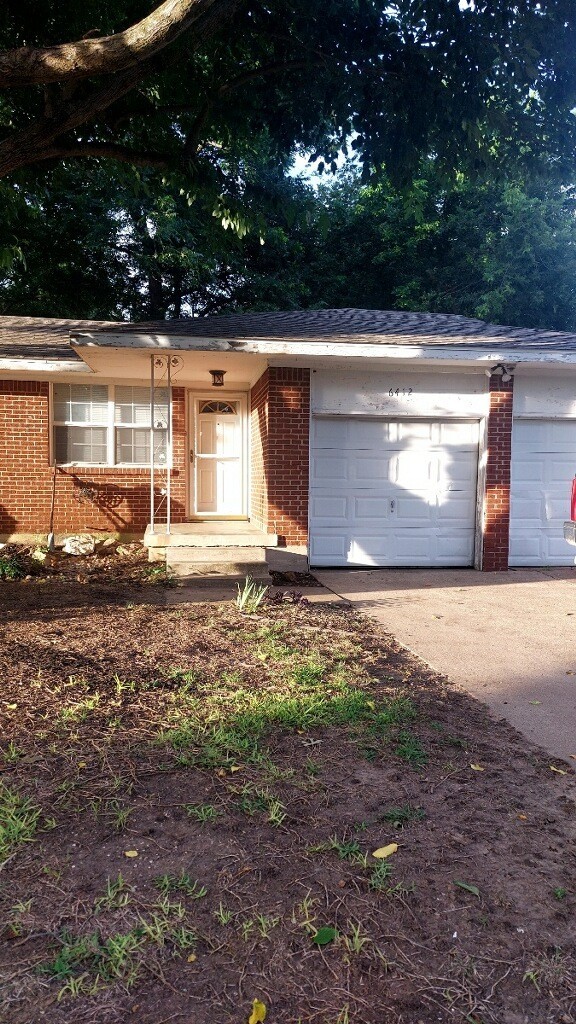
Straight Line field photography shows how framing, supports, access, and surrounding conditions become part of a pier-and-beam review.
Match each service to a measured or observable need
A Colleyville proposal should distinguish structural support from roof-water collection, surface flow, and installation access.
Straight Line identifies the foundation system before discussing a method. A slab may require analysis of movement across specific areas and possible pier support. A pier-and-beam or block-and-base system puts more emphasis on framing, bearing points, accessibility, shims, and floor behavior. The recommended limits should match the measured evidence rather than the visual prominence of one crack.
Effective drainage begins with a flow map. Roof discharge, irrigation, paved areas, planted beds, slopes, and outlets are observed during the evaluation. Surface collection, French drains, buried pipe, swales, or regrading may solve different problems. Straight Line explains which water source a component is meant to intercept and where it is intended to discharge.
Gutters need suitable capacity, sound attachment, sealed joints, and downspouts placed for the roof layout. At ground level, extensions or buried conveyance must move discharge toward an appropriate outlet. Repairing overflow at the eave does not finish the task if the new discharge remains trapped near the structure or landscape edge.
A whole-property explanation instead of a symptom shortcut
A reliable Colleyville evaluation should be repeatable: another reader can see which room, elevation, opening, exterior condition, planted area, and water route supports the conclusion. Straight Line organizes those observations before assigning a repair category, helping the owner understand whether the evidence points toward support work, drainage attention, monitoring, maintenance, or another trade.
Look for changes that share a location or timeline. Photograph both the detail and its relationship to floors, walls, openings, landscaping, and drainage.
Door or Window Changes
Sticking doors and windows matter more when the date, direction of binding, and nearby wall or floor changes are recorded together.
Flexible or Uneven Floors
Note where a floor feels soft, slopes, or changes at a room transition. The construction below determines what can be inspected.
Interior Joint Movement
Gaps at trim, cabinets, counters, or drywall joints can outline a movement pattern when their locations are mapped rather than listed.
Exterior Material Gaps
Separation near masonry, siding, windows, or an addition should be compared with construction joints and measured interior conditions.
Landscape Flow Paths
Mulch channels, washed soil, or recurring damp bands can reveal how runoff crosses planted areas and meets the structure.
Irrigation or Downspout Concentration
Overspray, broken components, short outlets, and roof-valley discharge can add moisture in one zone even when the rest of the yard appears dry.
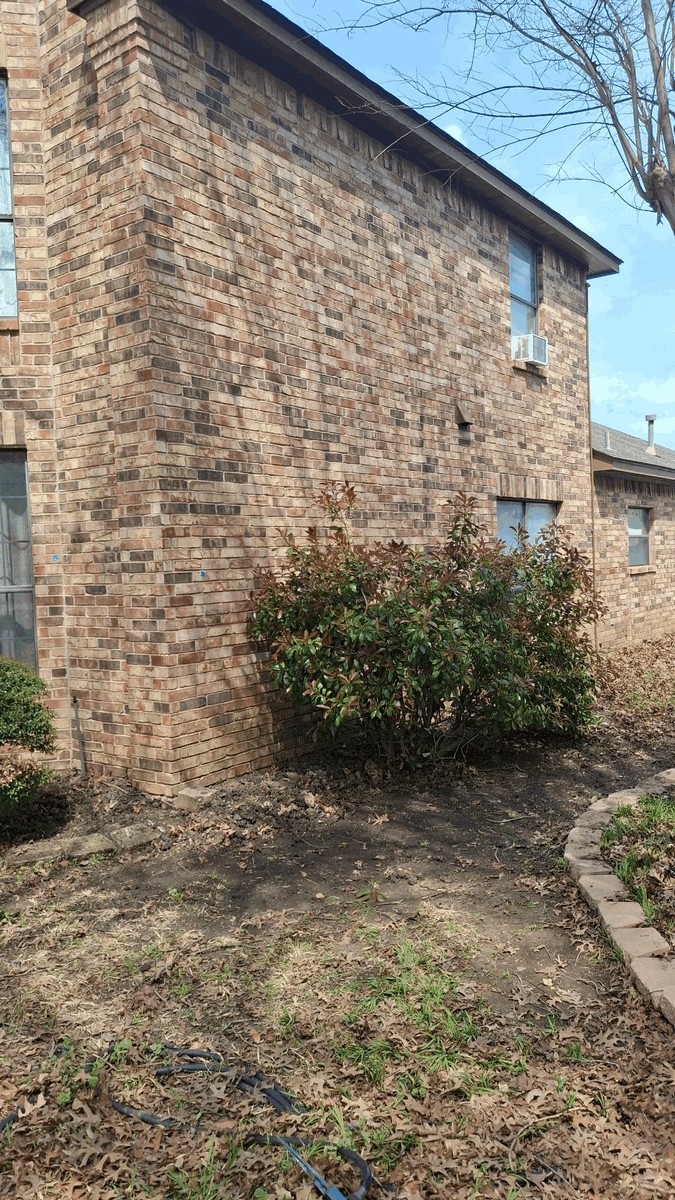
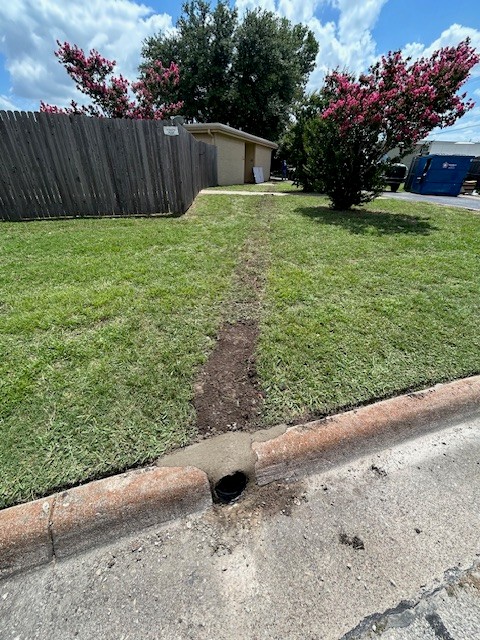
Straight Line evaluation method
The strongest Colleyville explanation uses layers. Interior elevations show relative level; doors and windows show how openings behave; crawlspace or slab observations identify the foundation system; and exterior notes trace roof water, irrigation, planting beds, hardscape, grading, and discharge. When those layers agree, the limits of a problem become easier to communicate. When they do not, the disagreement is a reason to investigate rather than force a conclusion.
Straight Line’s existing gallery does not contain a verified same-city project for this page. The photographs therefore illustrate field methods and access conditions only. A Colleyville repair decision would still depend on that property’s measurements, framing or slab design, utilities, landscape protection, moisture route, and the specific work that can be performed safely.
Straight Line field photography is shown to explain the evaluation and installation process; it is not presented as a Colleyville project.
Inspect the building, then trace the site conditions
1
The evaluation starts with the owner’s timeline, construction type, elevations, floors, cracks, and openings. The goal is a location-based record, not a checklist score.
2
The review moves outside to roof discharge, irrigation clues, beds, hard surfaces, retaining features, erosion, slope, and available outlets. Access and protected finishes are noted.
3
Straight Line separates structural, drainage, gutter, access, and restoration work; completes the approved scope; and provides qualifying lifetime pier-warranty terms with no transfer fees.
Measured conditions stay connected to the recommendation
Owners receive a practical explanation of the pattern, the service each line item addresses, and the conditions that could change the final scope.
Straight Line does not turn every crack, slope, or damp area into a predetermined pier or drain. The observed pattern controls the conversation.
Access routes, planted areas, irrigation clues, hardscape, and restoration limits are considered before work begins around a Colleyville property.
The company is fully insured. Qualifying pier work receives lifetime warranty documentation with no transfer fees according to the applicable terms.

Colleyville structure and site-water questions
Bring the inside and outside evidence together
Request a Colleyville evaluation for a structure, floor, opening, drainage, or gutter concern. Straight Line will document the observable pattern, explain where structural and site-water questions overlap or remain separate, and outline a practical next step without treating one symptom as the whole diagnosis.