
✓ Free Foundation Evaluations
◷ Monday–Friday, 8 AM–5 PM
◆ Fully Insured · Lifetime Warranty
★★★★★4.8 Google Rating·Family-owned foundation specialists
Foundation repair in Plano, TX is easier to evaluate when prior records can be compared with current conditions. Straight Line reviews foundation cracks, uneven floors, sticking doors, possible settling, elevations, past repair diagrams, warranty papers, drainage, moisture, grading, runoff, erosion, and later changes before recommending new work.
Collect the History
Previous evaluations, pier plans, plumbing records, photographs, and warranty documents establish context.
Measure Today
Current symptoms and readings are mapped without assuming every change belongs to the earlier repair.
Compare the Limits
The new recommendation identifies repaired, unrepaired, monitored, and uncertain areas separately.
Foundation
Repair
Pier & Beam
Solutions
Drainage
Support
Honest
Evaluations
Fast. Free. No Obligation.
Takes About 30 Seconds
Schedule Your Free Evaluation
No pressure. No runaround. Just a straightforward assessment.
Your information stays private and is never shared.
Family Owned
Personal accountability
Fully Insured
Professional protection
Lifetime Warranty
On qualifying pier work
No Transfer Fees
Protection that follows the home
Use prior work as evidence, not as a shortcut
A Plano foundation evaluation identifies the foundation system before comparing historical and current information. Slab foundation repair records may show earlier support locations, elevation points, plumbing work, or engineer documents. Pier and beam foundation repair history may include pier adjustments, shimming, beam or joist repairs, and crawlspace photographs. Straight Line checks what those documents actually cover and maps present foundation cracks, uneven floors, sticking doors, openings, and exterior changes to current measurements.
The comparison also includes roof water, gutters, downspouts, low areas, grading, runoff, moisture, erosion, and drainage outlets. Drainage systems and gutter installation may protect a documented water route, but they do not substitute for measured structural support. Retaining walls, excavation, and tunneling require their own purpose and constructability review. A prior repair does not automatically explain a new symptom or authorize repeating the same method elsewhere.
A warranty document is not the same as a current diagnosis.
Warranty coverage depends on its written terms, supported locations, owner responsibilities, exclusions, and transfer requirements. Preserve the document and contact the issuing company, while using a present evaluation to determine what current evidence supports.
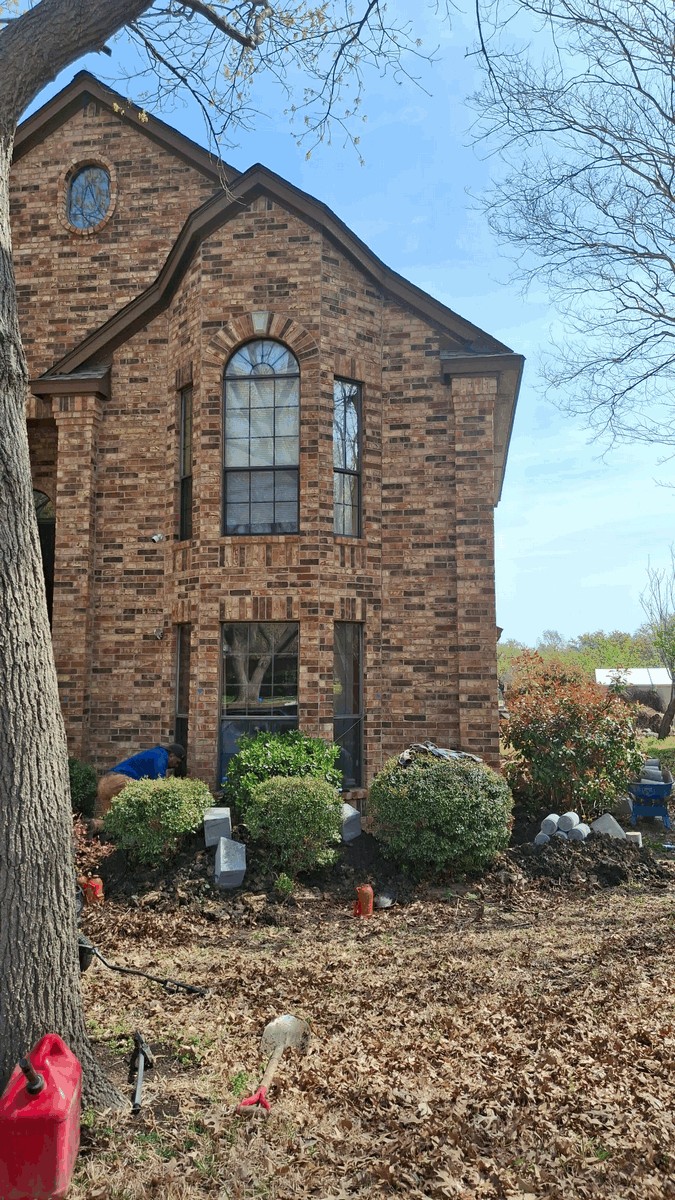
Straight Line process photography demonstrates the value of preserving installation locations and closeout records.
Separate past scope from present need
Each Plano recommendation should show whether it concerns prior work, an untreated area, drainage, or a different system.
Straight Line compares available historical pier or framing locations with current elevations and symptoms. Slab, pier-and-beam, and block-and-base foundations receive system-specific evaluation. The resulting scope identifies the measured zone, access, utilities, restoration, prior-work interfaces, and documentation needed for a defensible next decision.
Surface collection, French drains, solid pipe, swales, or grading are selected only after source, route, fall, outlet, and maintenance are understood. Existing drains are inspected as observable components: inlet condition, flow path, discharge, sediment, damage, and access may reveal whether repair or redesign is appropriate.
Gutter review covers roof area, valleys, pitch, fascia, seams, capacity, overflow, and downspouts. Straight Line also follows the discharge at grade. Extensions or conveyance may be needed where collected roof water returns to a low area or contributes to erosion near the structure.
A current conclusion with historical context
Professional Plano evaluation treats previous work as one layer of evidence. Straight Line notes what was documented, what can be observed, what has changed, and what remains unknown. The proposal then explains whether the new scope addresses an unsupported area, maintenance, drainage, access, or a condition that requires the original contractor, an engineer, a plumber, or another specialist.
Record new or recurring changes and compare them with the locations covered by prior documents.
A Crack Beyond Prior Support
Mark the line on both the current floor plan and any available repair diagram before assuming a connection.
A Repaired Crack That Returns
Preserve the cosmetic repair date and photographs so recurrence can be compared with readings and nearby openings.
A New Door Alignment Change
Record the exact opening, rubbing edge, latch, floor response, and whether it lies inside or outside the earlier work area.
Floor Change Near an Addition
Different construction, joints, and floor assemblies require context before one elevation is assigned to prior movement.
Drainage That No Longer Flows
Standing water, sediment, broken outlets, or inaccessible cleanouts can indicate maintenance or design issues in an existing system.
Roof Water Reaching a Low Point
A gutter can collect properly while the downspout or extension releases water into an unsuitable grade-level route.
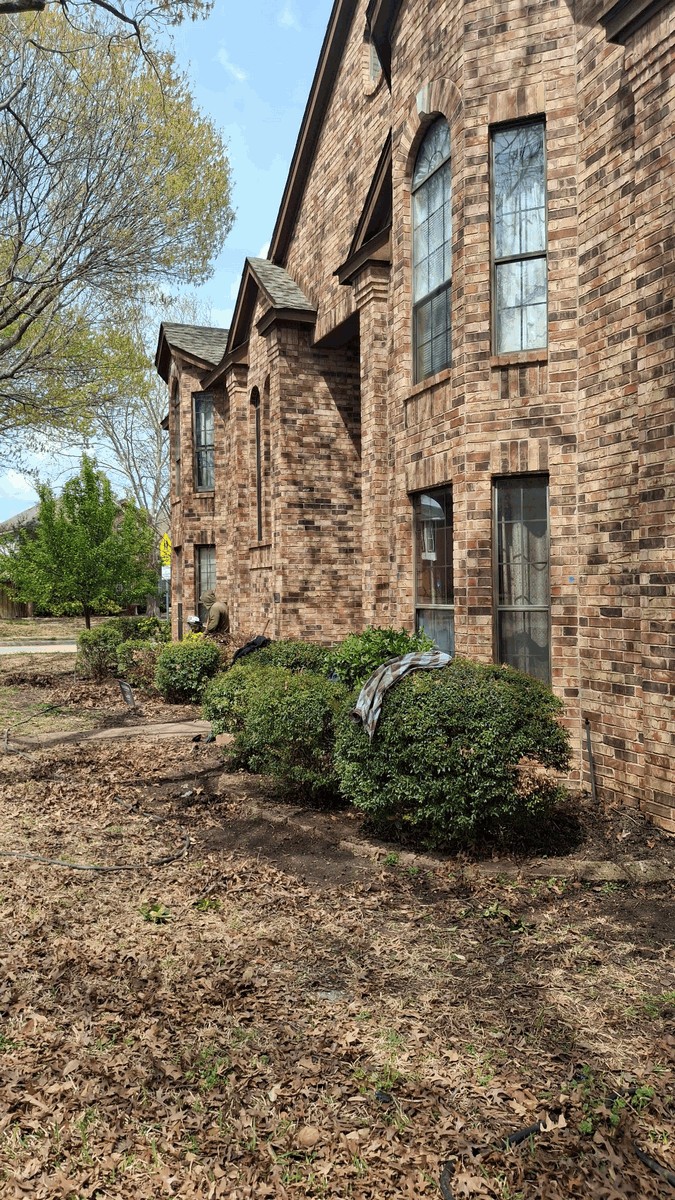
Straight Line comparison workflow
Start with original files when possible: evaluation, elevation plan, engineer documents, repair diagram, invoice, plumbing records, photographs, transferable warranty terms, and maintenance notes. Create a current plan using the same orientation, then label today’s symptoms and measurement points. Differences in location, scope, or method become questions to investigate rather than assumptions that all movement has returned.
Straight Line does not currently have a verified same-city gallery project for this page. These field images show company documentation around support installation, but they are not proof of a Plano method or outcome. Current repair locations, access, quantities, drainage work, engineering, permits, restoration, and warranty applicability depend on the property record and evaluation.
Straight Line field photography is shown to explain the evaluation and installation process; it is not presented as a Plano project.
Collect, compare, and define the new decision
1
The owner shares available elevation plans, pier diagrams, engineer or plumbing records, photographs, invoices, warranty terms, and observed changes. Missing items are noted rather than guessed.
2
Straight Line records foundation type, elevations, symptoms, drainage, gutters, grading, access, utilities, prior-work interfaces, and the specific limits supported today.
3
Approved work is completed and recorded with changes, closeout photographs, restoration notes, and applicable lifetime warranty terms with no transfer fees for qualifying pier work.
Historical context without inherited assumptions
Straight Line helps a Plano owner understand what the existing record says, what current evidence shows, and what the next scope actually covers.
A prior repair or warranty informs the evaluation but does not automatically diagnose a new crack, low floor, or sticking opening.
Earlier supports, new work, drainage, access, utilities, exclusions, third-party steps, and restoration are distinguished in the proposal.
Straight Line is fully insured and supplies applicable lifetime warranty documentation with no transfer fees for qualifying pier work.

Plano prior-repair and documentation questions
Bring the past record into a current evaluation
Schedule a Plano evaluation and gather any prior repair, elevation, engineering, plumbing, drainage, and warranty records. Straight Line will compare them with current conditions, explain which areas and systems need attention, and define a practical scope without assuming every new symptom belongs to the old work.